UX/UI Design — 2025
Gamifying waste management. A mobile app that makes recycling accessible and rewarding by helping users find nearby bins, earn points, and track their environmental impact.
01 — The Problem
Recycling rates are dangerously low — and access is the biggest barrier.
Only 30% of plastic bottles and 45% of aluminum cans are recycled in the U.S. People may not recycle for various reasons: lack of access to recycling bins, confusion about what can be recycled, and no incentive to change behavior.
02 — Research Findings
I investigated why waste management remains a crisis and what barriers prevent users from recycling consistently.
Low Recovery Rates
Only 30% of plastic bottles and 45% of aluminum cans are recycled in the United States — most recyclable materials end up in landfills.
Infrastructure Gaps
A comparison of recycling maps shows Stockholm, Sweden has massive infrastructure compared to the limited recycling centers in Boston.
User Barriers
Lack of knowledge about where to take materials, social pressure discouraging recycling, and not enough convenient bins in many neighborhoods.
03 — The Solution
Gamify the act of recycling — make it rewarding, social, and accessible.
By scanning smart dumpsters, users earn points redeemable for products and services. A social component encourages competition and community impact tracking.
Smart Maps
Find the nearest recycling bin or dumpster with an interactive map and real-time availability.
Social Rating
A social component encourages users to achieve a high recycling score and compete with their community.
Rewards System
Return empty bottles and earn points redeemable for products and services — turning waste into value.
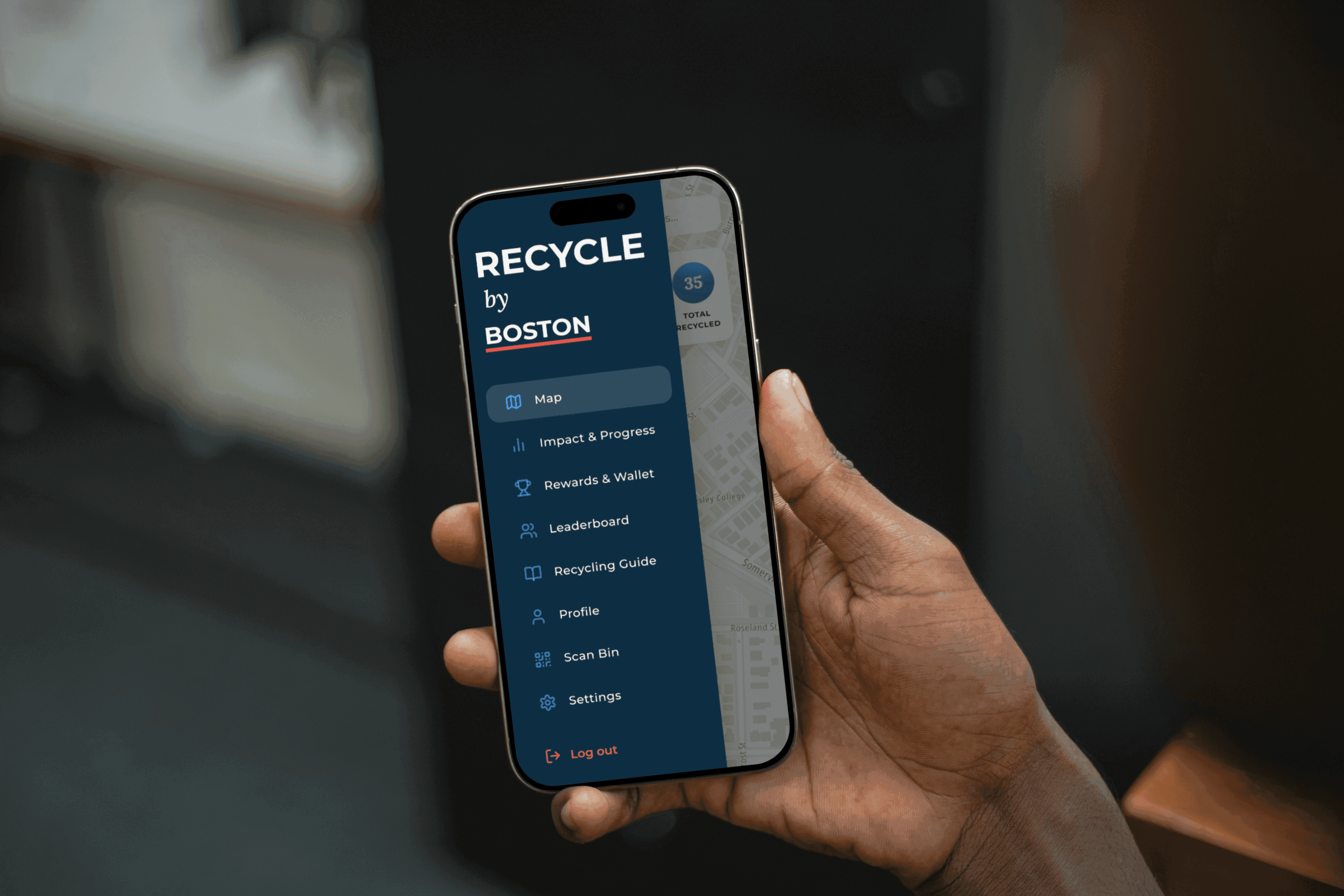
04 — Design Language
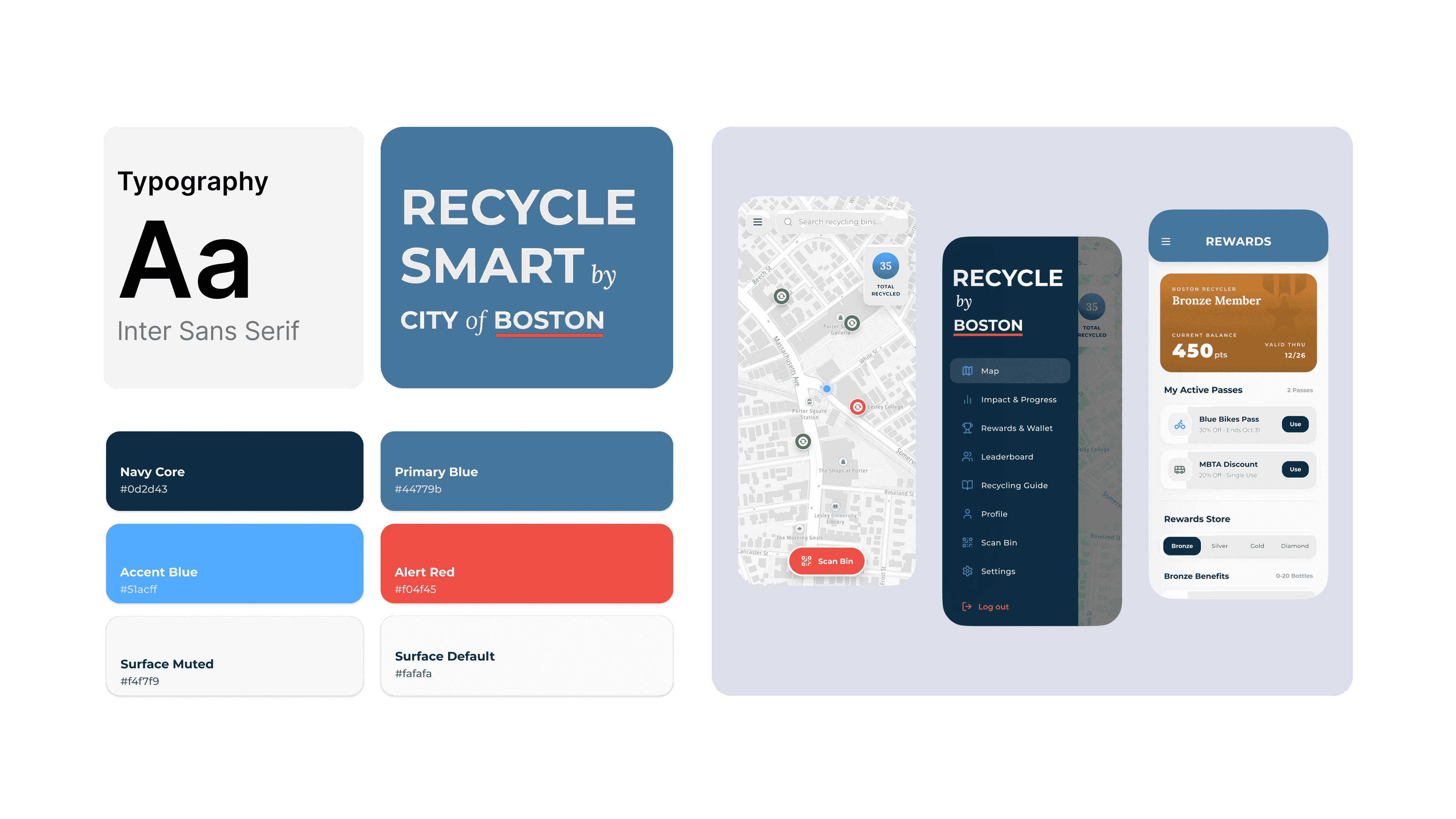
A vibrant visual system built around environmental awareness — deep purples, earthy tones, and playful iconography designed to make recycling feel engaging rather than obligatory.
Connect CMS Image fields (Image 1–10)
05 — Testing & Validation
I tested the core user journey — finding a nearby bin and completing a recycling session — with 5 participants to validate the gamification approach.
Map Usability
All 5 participants located the nearest recycling bin within 10 seconds. The map interface felt intuitive — no one needed instructions to start navigating.
Gamification Impact
4 out of 5 testers said the points and leaderboard would motivate them to recycle more often. The social component scored highest in desirability testing.
Key Iteration
Users wanted to see bin types (plastic, glass, paper) before walking there. I added material type filters to the map, reducing wasted trips and increasing user confidence.
06 — What I Took Away
Make it easy first
People won't recycle if they can't find a bin. Accessibility and convenience must come before any gamification or social features.
Social pressure works
The social rating system was the key insight: seeing friends and neighbors recycle creates positive peer pressure that outperforms monetary rewards alone.
Next step
Partner with municipalities to integrate smart dumpster data and expand the map coverage to underserved neighborhoods.